



Exchange-Traded Funds (ETFs) have become one of the most popular ways to invest because they...
Turning your savings into reliable retirement income is more complex than building them. Decumulation isn’t simply “what do I withdraw?”, it’s coordinating longevity risk, taxes, market volatility, and simplicity. Here are the key considerations for Canadian retirees.
1. Start with Lifestyle, Not Accounts
Your withdrawal strategy must reflect the life you want to live. Break spending into:
-
Essential: housing, food, utilities, insurance
-
Discretionary: travel, entertainment, hobbies
- Occasional: home repairs, vehicles, major health needs
Match guaranteed income (CPP, OAS, pensions) to essentials and use portfolio withdrawals for discretionary spending. Decumulation often fails when withdrawals aren’t anchored to real-life cash flow needs.
2. Know Your Income Sources and Tax Treatment
Most retirees draw from several sources:
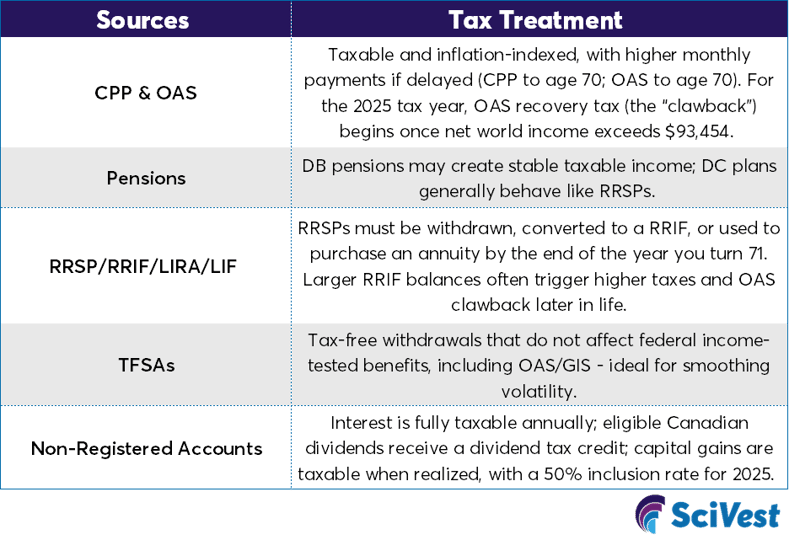
Ultimately, decumulation is tax planning.
3. Protect Against Sequence-of-Returns Risk
Market declines early in retirement can permanently shorten portfolio longevity. To mitigate:
-
Maintain an equity allocation that still supports long-term growth
-
Keep 2–3 years of withdrawals in cash or short-term bonds
- Rebalance based on rules, not headlines
4. Withdrawal Order Matters - But Isn’t One-Size-Fits-All
Patterns that typically work well include:
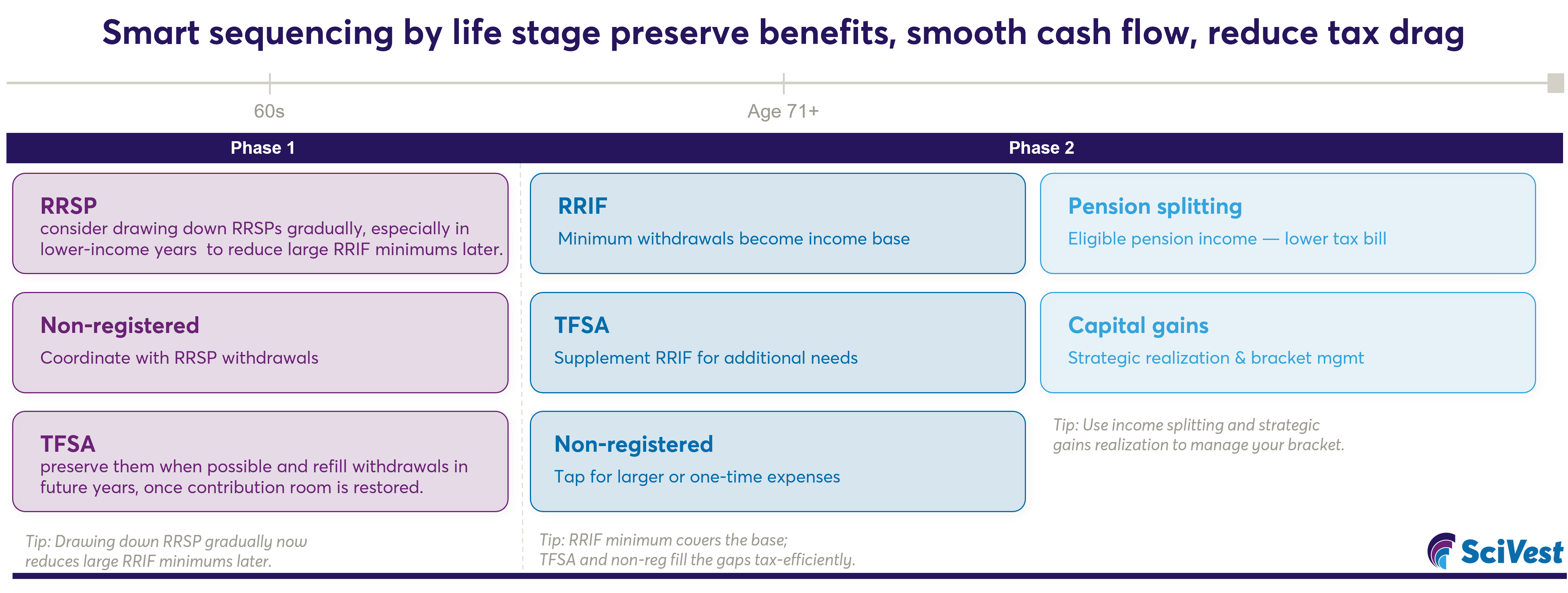
Done properly, smart sequencing preserves benefits, smooths cash flow, and reduces tax drag.
5. Understand the OAS Clawback
Once income exceeds the threshold, each additional dollar reduces OAS by 15 cents, effectively increasing your marginal rate by 15%. Proper planning - especially RRSP/RRIF withdrawals in your 60s - helps avoid paying more tax than necessary.
6. Timing CPP and OAS
For many healthy Canadians, delaying CPP (and sometimes OAS) until age 70 offers strong, inflation-protected longevity insurance. Optimal timing should be based on integrated modelling rather than simple breakeven math.
7. Keep the Portfolio Working
Retirement may span three decades or more. Going “all GICs” rarely keeps pace with inflation.
A SciVest-style approach maintains:
-
Global equity exposure
-
High-quality bonds and cash buffers
-
Low-cost, diversified ETFs
- Smart asset location across accounts
8. Build Flexibility and Simplicity
Effective decumulation incorporates spending guardrails, contingency planning (survivor income, long-term care), and clean, manageable account structures.
The Bottom Line
A strong decumulation plan is not guesswork, it’s disciplined, evidence-based decision-making that turns lifelong savings into a reliable, tax-efficient income stream. When cash flow, taxes, market risk, and government benefits are coordinated thoughtfully, the result is clarity, confidence, and real peace of mind.